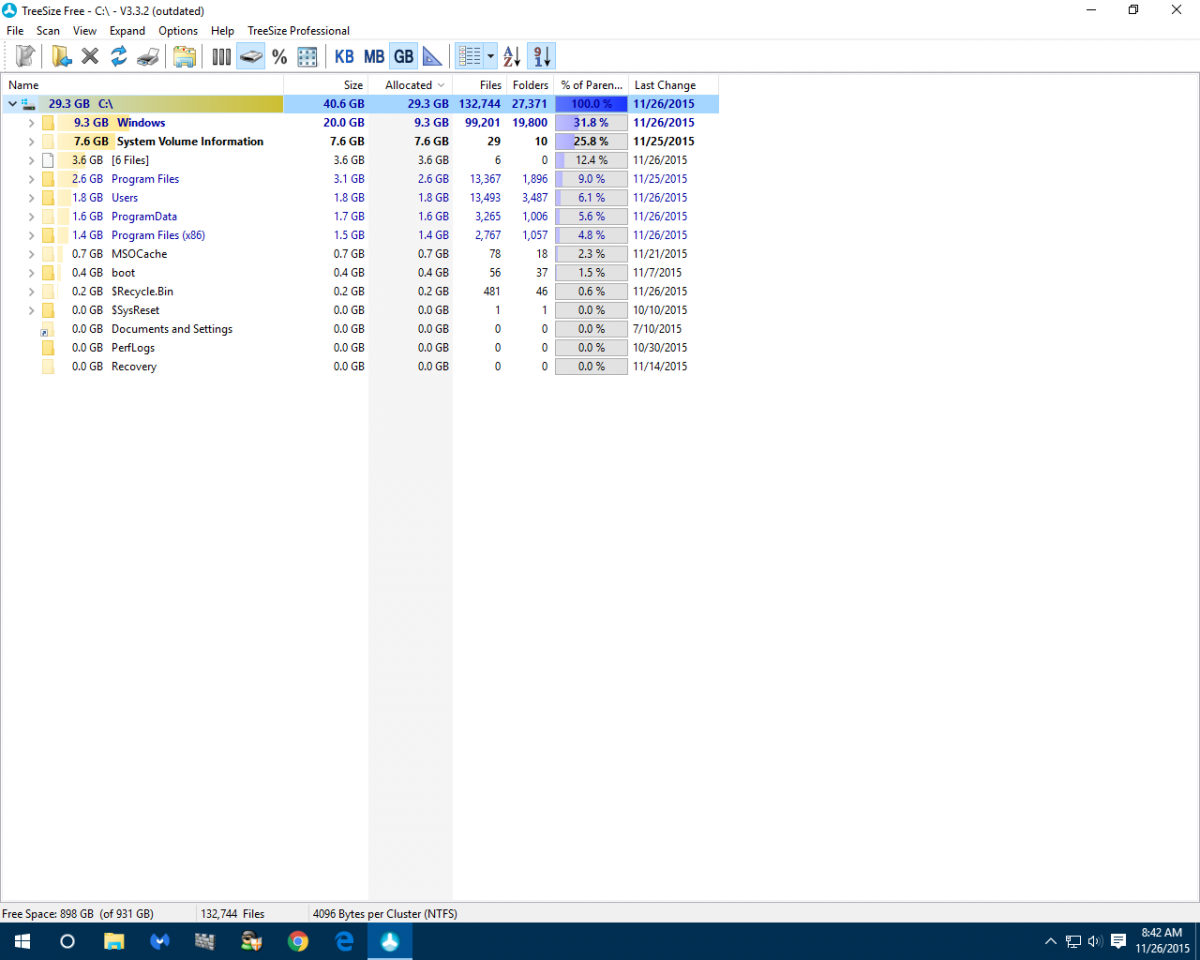
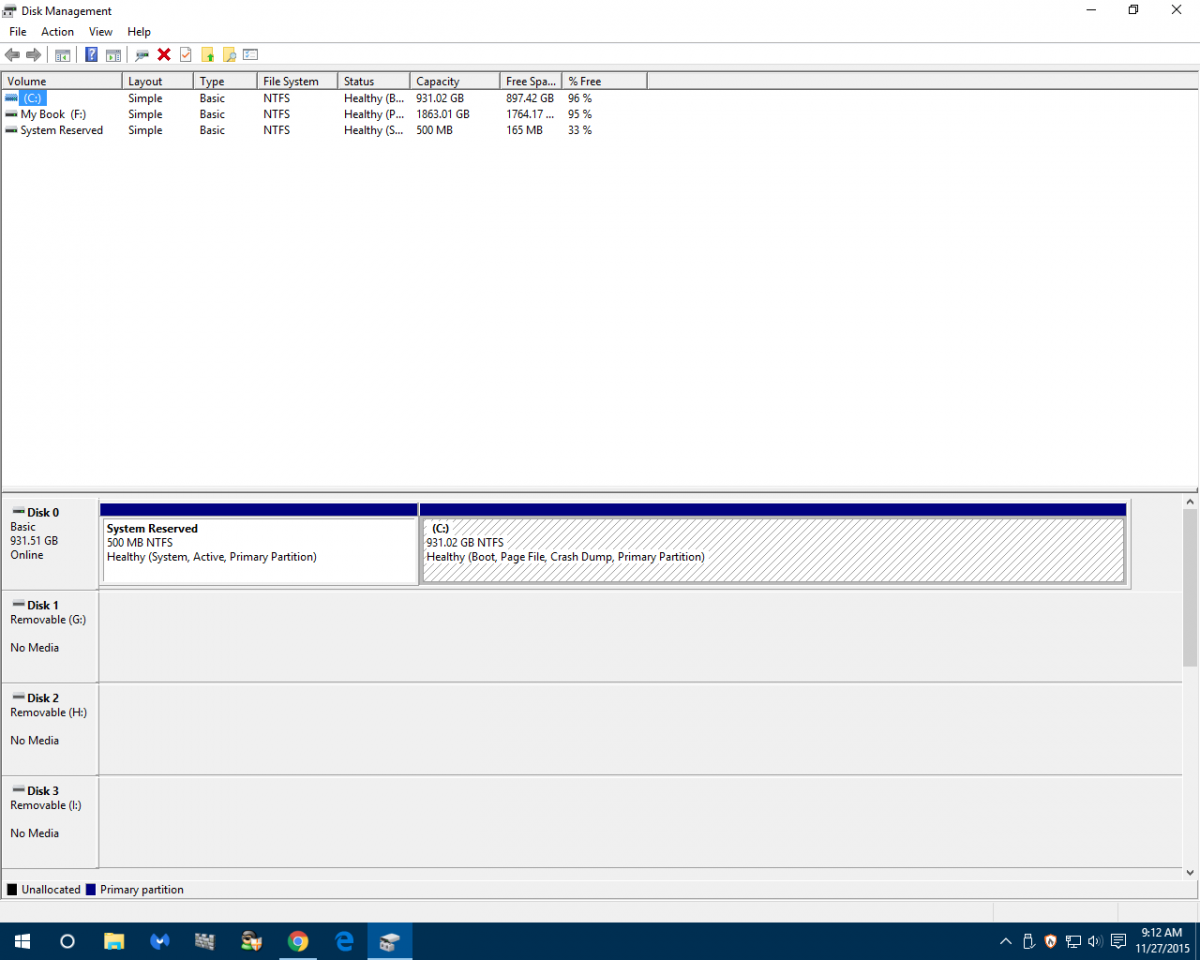
I was looking at TreeSize and noticed my PC which has one partition has 40 GB of used space. Everything is in order. I have 1T in all.
If I create another partition, how which I have learned by watching YouTube videos, how can I shrink my C: drive with out affecting any of the programs shown on the tree. Do the new partition seek a unused spot or do you specify where apps and programs go so they are not damaged,deleted or affected?
I do not want to affect my used portion but want to create a smaller C: so when I image, it will be shorter and so I can further learn about partitioning .
Redundantly my goal is to learn about partitioning but also to make a smaller image of my system if that possible. I'll do that when I get home and I am at my computer.
TY
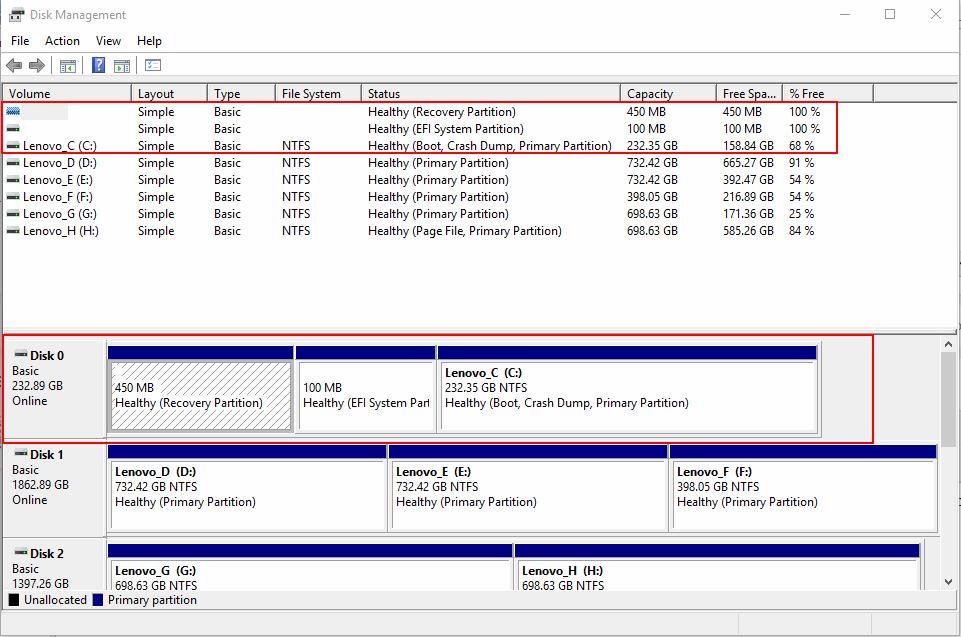
The backup image size depends on the amount of used space, not the total size of the drive. For instance, I have a 250GB SSD which shows in File Explorer as 138GB free of 232GB. That means 94GB is in use.
The Macrium backup image for that drive which has 3 partitions, is 52GB.
It has a 450MB Recovery partition, a 100MB EFI partition and a 232GB Boot, Primary partition.
Looks like you are using about 34GB on C: for Windows 10. Add in the hidden system stuff and that's closer to 50GB. You backup image is 40GB which seems right. The entire drive is being imaged, but due to compression, the unused space takes up very little room in the backup image.
For instance, 900GB of unused space can be represented by a single 32 byte word in the backup so in effect you are only physically backing up used space. I hope that makes sense.
I agree it would be good to shrink your C: partition and create a new partition for data. You should be able to do this via Disk Management or a program like Minitool Partition Wizard.
If I have this right, The image is backing up both used and unused space but because of the nature of unused space , it is not taking up much room.
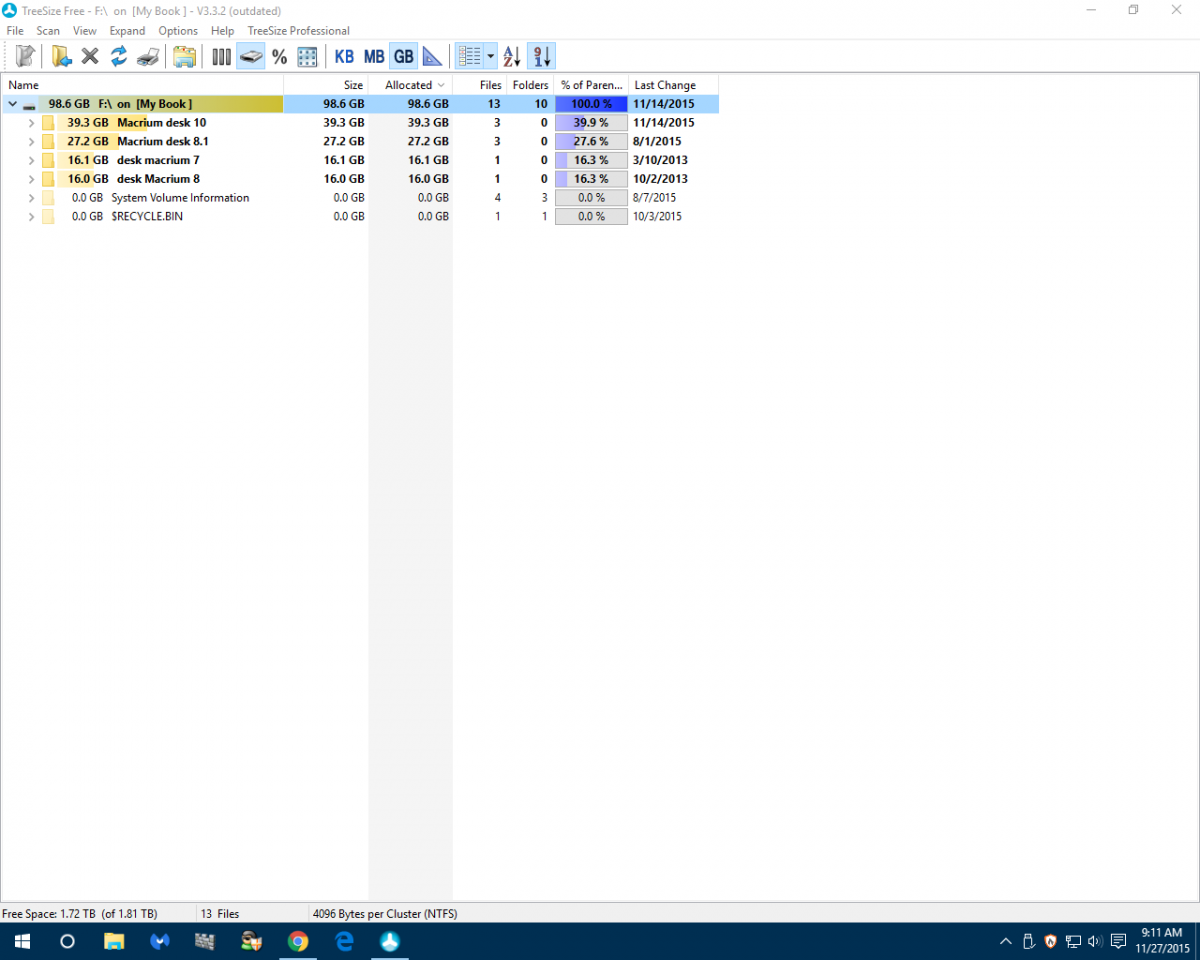
My concern when you 'shrink' a partition, that it will over ride the images I have created. I don't know if the disc management tool knows where to create the new partition and avoid the images.
When I watch YouTube they use Windows disc management tool to shrink, then create a new simple partition. Is there a way to be sure you do not override the images?
I currently have my data on 2 separate flash drives. So if I put the data on a new partition and imaged the system and data, they could be recovered, correct? You would ask Macrium to image more than the system and include the data partition?
I backup all of Disk 0 (boot drive) and partition D: on Disk 1 (where most of my data that changes over time, is stored, like pictures and music).
Yes. When you shrink C: you free up space which can then be formatted and assigned a new drive letter. You will need to redo the Macrium setup for the disk to include the new partition. The first backup would then be a full and the next number of backups would (or could) be incremental.
I have mine setup to do 1 full and 6 incrementals.
Is there a way to be sure you do not override the images?
Not sure what you mean by this. You should be backing up to an external hard drive. Once you redo the backup setup you start over as I mentioned above, doing a full first then incrementals.
What I did when I changed the drive layout was rename the backup folder on the external drive then backup to a different folder so there is no chance of overlaying already backed up data. Once I had a good full backup, then I deleted the old backups by deleting the renamed folder.
Your information has been very useful. I did venture into creating a new partition and naming it. I then made it into a new simple partition and it was formatted following the Win 10 wizard. I could then have inserted data had I wished to do so.
I also created another partition to experiment.
Afterwards, I deleted the partition.
I then extended the C: drive so it was as it appeared before experimenting.
My terms are probably not exact but I hope they convey the processes.
Candidly, I think for my level, and to keep sensitive data out of the PC, I continue to use 2 flash drives instead of inserting the data in to the new functional partition. However, I now know how to do it and the time may come when I advance further. Of course this will affect Macrium.
I do periodic full updates with Macrium rather than incremental. I understand now that when you recover an image the incremental images become as one image to recover.
I do not know if you do that or if Macrium does that for you.
Speaking of Macrium, I was watching a video today and noticed a step in the recovery process I would have missed. I cannot be sure of the terms but there is small inclusive statement during the recovery process that says in effect, "Click here to include the partitions. Mine was the C: and the reserve partitions. I would have missed that during a recovery.
I found the stick you suggested to be better than the disc as rescue media.
If my hard drive goes I think age and cost would dictate a standard sata replacement one rather than an SSD.
It must be a sight to see USB 3 and the SSD as far as speed goes.
Maybe someday!
✨ Ask AI
AI can make mistakes. Check the cited posts. Archived advice can be out-of-date
Don't include personal information. Questions and selected public posts go to OpenAI. About Ask AI